Buying land can feel simple at first. You find a property with a good price, a nice location, and plenty of potential.
But one of the most common mistakes buyers make is focusing only on the purchase price.
In reality, the cost of land is only part of the picture.
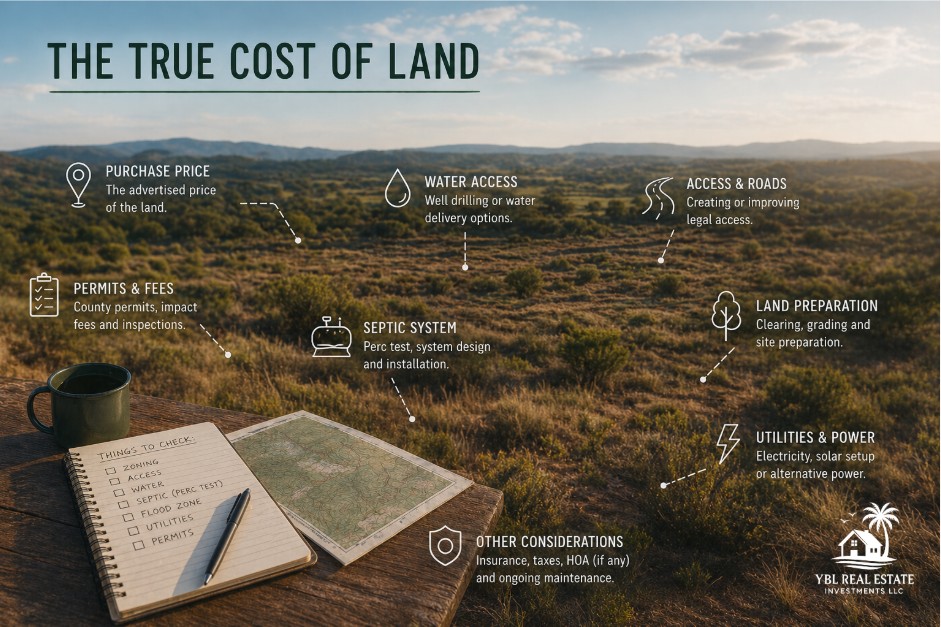
Before moving forward, it’s important to understand the additional expenses that may come with owning and using the property. These costs don’t always appear in listings, but they can significantly affect your plans.
Every property is different, but there are several expenses that land buyers should consider before making a decision.
If the property is not connected to a public sewer system, you will likely need a septic system.
This often requires a perc test to determine whether the soil can support it. If the land does not pass the test, installing a septic system may not be possible.
Even when it is possible, installation costs can vary depending on the terrain and soil conditions.
Water is one of the most important considerations when buying land.
Depending on the location, your options may include:
Each option comes with its own cost and planning requirements.
Not all land has clear or legal access.
Some properties may appear accessible on a map but lack legal road access, which can create challenges when building or obtaining permits.
In some cases, access improvements or agreements may be required.
Raw land often requires preparation before it can be used.
This may include:
The cost depends on the condition of the land and how you plan to use it.
Building or developing land typically involves permits and approvals from the local county.
These may include:
Requirements and costs vary by location, so it’s important to check with the county before moving forward.
Even if you plan to live off-grid, utilities still need to be considered.
This might include:
While these systems can reduce long-term costs, they still require initial setup and ongoing maintenance.
Many buyers focus on the listing price because that is the most visible number.
However, land listings don’t always include the full picture of what it takes to use the property.
Without proper research, a property that appears affordable can become more expensive than expected.
The best way to avoid unexpected costs is to plan ahead.
Before purchasing land:
A small amount of research upfront can prevent larger issues later.
Land ownership can be simple and rewarding when you understand what to expect.
Looking beyond the purchase price helps ensure that the property fits both your vision and your budget.
With the right preparation, you can move forward with confidence and avoid unnecessary surprises.
If you’re unsure about a property or want a second opinion before moving forward, feel free to reach out via our Contact page
Have questions about owner financing? Visit our FAQ or Contact page anytime.

US Vacant Land is operated by YBL Real Estate Investments LLC, a land investment company focused on making vacant land ownership simple, transparent, and accessible.