Buying land can feel exciting. You find a beautiful parcel, the price looks right, and you begin imagining everything you could do with it – a tiny home, an off-grid retreat, a small farm, or a long-term investment.
But before you sign anything, there’s one critical step that many buyers overlook.
Check the zoning.
It may not sound exciting, but zoning rules determine what you can legally do with your land. Skipping this step can lead to costly surprises and restrictions after the purchase.
Taking a few minutes to understand zoning before buying can save you time, money, and frustration later.
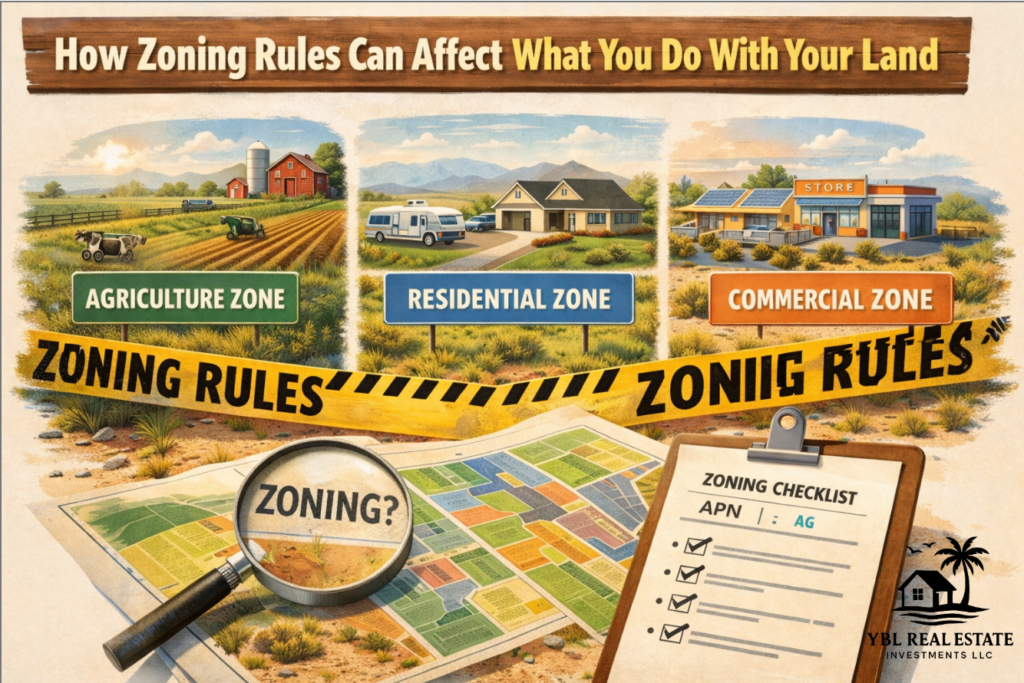
Zoning is essentially the rulebook that counties and cities use to regulate how land can be used.
Each parcel is assigned a zoning designation, and that designation determines what activities are allowed on the property.
Zoning can affect things such as:
Different zoning categories allow different types of structures. Some areas allow site-built homes, manufactured homes, or accessory buildings, while others may have restrictions on size, height, or building type.
Certain zoning areas allow rural living activities such as keeping animals or operating short-term rentals. Other zones may restrict these uses.
Zoning may determine whether activities such as farming, installing solar systems, or living off-grid are permitted.
If your vision for the land doesn’t align with the zoning rules, your plans may not be allowed.
The good news is that checking zoning is usually simple and can be done in just a few steps.
Search online for your county’s Planning & Zoning Department or GIS Map.
Most counties provide public tools that allow you to research land parcels.
Each property has an APN (Assessor Parcel Number).
You can usually find this on property listings or the county tax assessor website.
Enter the parcel number into the county’s GIS map system.
You’ll typically see a zoning code such as:
Once you know the zoning code, look it up in the county’s zoning ordinance to understand what uses are allowed.
If you’re unsure, calling the county planning office is always a good idea.
Helpful questions to ask include:
Planning departments are usually very helpful and can clarify local regulations.
Checking zoning may seem like a small step, but it can make a big difference.
Understanding the rules before purchasing helps ensure the property actually supports your plans.
A quick zoning check today can prevent expensive problems tomorrow.
When buying land, always make sure the property aligns with your vision before moving forward.
If you have questions about zoning, land use, or how the buying process works, feel free to reach out.
You can also explore our current listings to see available properties.
Have questions about owner financing? Visit our FAQ or Contact page anytime.

US Vacant Land is operated by YBL Real Estate Investments LLC, a land investment company focused on making vacant land ownership simple, transparent, and accessible.